This article aims to provide businesses with actionable solutions on how to use Hong Kong-based cloud hosting to achieve high availability and cross-border acceleration. It covers network architecture, load balancing, data redundancy, DNS and CDN optimization, as well as security and compliance recommendations to facilitate SEO and GEO search optimization.
Hong Kong boasts abundant international links, access to multiple operators, and low latency, making it an ideal acceleration node for markets in the Asia-Pacific region and around the world. Clustered cloud servers can be distributed across multiple nodes and managed uniformly, improving availability and cross-border access experience.
A high-availability architecture must include multi-availability zone deployment, instance redundancy, automatic scaling, and health checks. Deploying a cluster of cloud servers across different data centers can reduce single points of failure, and combined with automated operations and maintenance, it ensures stability and rapid fault recovery.
L4/L7 load balancing is used for session allocation and traffic scheduling. Combined with intelligent traffic management and weight adjustment, it enables proximity-based access and balanced traffic distribution. Work in conjunction with DNS policies to improve overall availability and access stability.
Data should adopt a master-slave or multi-active strategy, combined with snapshots and asynchronous/synchronous replication. Regularly back up and test recovery procedures to ensure that business operations can switch quickly in the event of a single point of failure or network interruption, while maintaining data consistency.
Cross-border acceleration relies on CDN edge nodes, routing optimization, and transmission protocol optimizations (such as TCP optimization or QUIC). Deployment Hong Kong Station Cluster As edge computing nodes, cloud servers can reduce origin-server latency and improve the stability and throughput of cross-border access.
By combining Anycast with GeoDNS, users can be routed to the nearest node based on their geographical location, reducing DNS resolution latency. Configure multi-level resolution strategies and implement proper TTL and health checks to improve switching speed and availability.
Multi-operator access and BGP intelligent routing can reduce packet loss and jitter. It monitors link quality and supports elastic bandwidth expansion to ensure stable service during peak times, while leveraging QoS policies to prioritize critical traffic.
Cross-border deployment must focus on DDoS protection, WAF policies, transport-layer encryption, and access control. Comply with data sovereignty and regulatory requirements by implementing proper log auditing and privacy protection to meet the legal and regulatory demands of various markets.
Build automated deployment, configuration management, and continuous delivery pipelines to improve operational efficiency. By integrating a unified monitoring, alerting, and testing framework, disaster recovery drills are conducted regularly, and monitoring metrics and response procedures are adjusted according to SLAs.
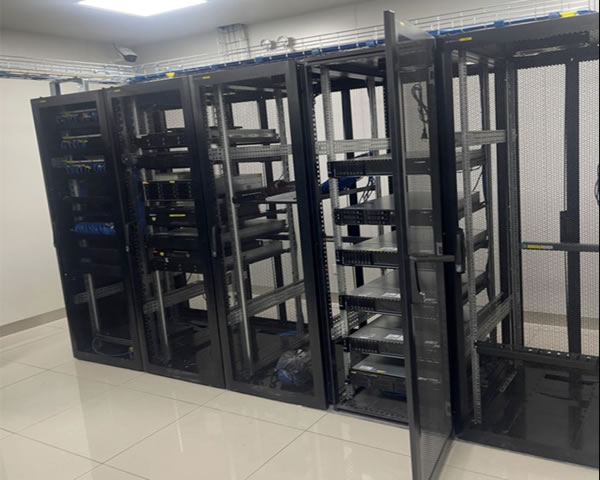
When enterprises implement cloud hosting in Hong Kong to achieve high availability and cross-border acceleration, they should first assess their business needs and access distribution, adopting multi-node redundancy, load balancing, CDN and DNS optimization, as well as strengthening security and compliance. Verify performance and switching strategies in phases, continuously monitor and optimize costs and experience.
- Latest articles
- Recommended Recommendations For Operators To Improve Thailand's High-Defense VPS Protection And Bandwidth Stability By Comparison
- Optimized Storage Costs For Hong Kong Hosted Servers, Hard Disk Servers, Layered Storage, And Cold Archiving Solutions
- Are Tencent Cloud Korean Servers Native? Recommendations For Local Service Provider Integration And Latency Optimization
- The Enterprise Migration Guide Teaches You How To Apply For US Dual-line Server Hosting To Ensure Compliance
- How Does AWS Cloud Server In Japan Charge? Bill Analysis And Fee Alert Settings
- Beginner's Guide: Which Hong Kong Site Cluster Servers Are Best To Use? Choose Based On Your Business Scale
- A Detailed Explanation Of US High-defense Servers Involves Latency, Bandwidth, Cleaning Capability, And SLA Comparison
- A Summary Of Common Questions About Hong Kong VPS Access In The US And A Guide To Optimal Connection Configurations
- Korean CN2 Network Cloud Service Product Selection Guide Performance, Security, And Scalability Evaluation
- Developer Manual: Best Practices For Network And Security In Configuring Linode Japanese Native IP
- Popular tags
-

Beginner's Guide: What Is Hong Kong Station Cluster 8C And How To Choose The Right CPU And Memory Configuration?
This article is a beginner's guide, explaining what Hong Kong site cluster 8c is, and detailing how to choose the right CPU and memory configuration for your network, balancing performance, stability, and cost-effectiveness. -

Performance Evaluation And User Experience Of Uu Accelerator Server In Hong Kong
This article evaluates the performance of UU accelerator in Hong Kong and shares user experience to help you better understand the advantages and disadvantages of this tool. -

The Top Ten Computer Rooms In Hong Kong Reveal Which Ones Deserve Attention And Choice
this article reveals the top ten computer rooms in hong kong, analyzes the characteristics and selection suggestions of each major computer room, and provides enterprises with a reference for selecting computer rooms.